Opening Keynote: Passengers: Designing for a New Class of Mobile Users
Stephen Brewster, University of Glasgow, United Kingdom
Bio
Stephen Brewster is a Professor of Human-Computer Interaction in the School of Computing Science at the University of Glasgow. He got his PhD in auditory interface design at the University of York. After a period spent working in Finland and Norway, he has worked in Glasgow since 1995. He leads the Multimodal Interaction Group, which is very active and has a strong international reputation in HCI. His research focuses on multimodal HCI, or using multiple sensory modalities and control mechanisms (particularly audio, haptics and gesture) to create a rich, natural interaction between human and computer. His work has a strong experimental focus, applying perceptual research to practical situations. A long-term focus has been on mobile interaction and how we can design better user interfaces for users who are on the move. Other areas of interest include VR/AR, wearable devices and in-car interaction. He pioneered the study of non-speech audio and haptic interaction for mobile devices with work starting in the 1990's. Brewster’s work has had over 18,000 citations. He was a General Chair of CHI 2019 in Glasgow, CHI papers chair in 2013 and 2014, and has previously chaired MobileHCI, EuroHaptics and TEI. He is a member of the ACM SIGCHI Academy, an ACM Distinguished Speaker and a Fellow of the Royal Society of Edinburgh. He is also a member of the ACM CHI Steering Committee, setting the direction for the CHI conference series.

Closing Keynote
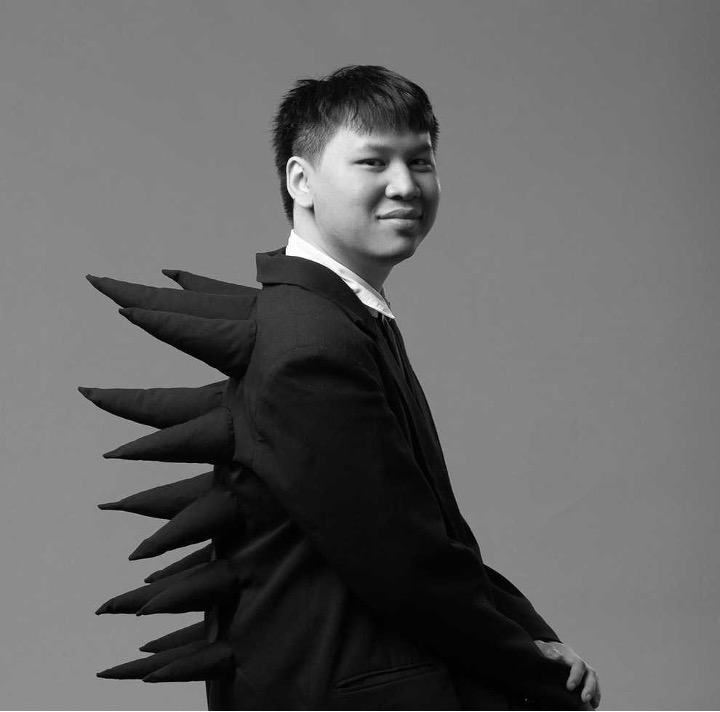
Cyborg Intelligence: Inventing, Investigating, and Inspiring Human-AI Systems for Human Flourishing
Pat Pataranutaporn, Massachusetts Institute of Technology (MIT), United States of America
Abstract
As humans and technology become increasingly integrated at both personal and societal levels, we are essentially evolving into "cyborgs," yet this transformation does not inherently ensure positive outcomes for humanity. My research takes an interdisciplinary approach to the development of AI systems and the study of human-AI interaction. More specifically, my research: (1) Creates novel AI prototypes through personalized systems that support human flourishing by facilitating learning, enhancing well-being and supporting creativity; (2) Examines the science of human augmentation by AI systems through large-scale experimental studies that reveal the effects of AI on human decision-making, psycho-social outcomes, behavior, beliefs, sense of self, and other critical aspects; (3) Develops integrated research methods and techniques that combine qualitative and quantitative analyses of human-AI interaction, along with novel platforms and methods that others can use to implement human augmentation systems. The goal of my work is to establish a new discipline that focuses on the science of human-AI interaction for human augmentation, one that empowers AI developers with a more informed understanding of the implications of design choices and inspires novel AI use cases that foster human flourishing. In this talk I will discuss both my scientific research as well as artistic work that explores the future of human flourishing with AI, ranging from performances to a science fiction series premiered on Netflix, to expand our collective imagination. My hope is to catalyze a new intellectual renaissance with AI and contribute to the advancement of AI that benefits the human experience.
Bio
Pat Pataranutaporn, Ph.D. is an assistant professor and a researcher at the Massachusetts Institute of Technology (MIT). He serves as a co-director of the Cyborg Psychology research group at the MIT Media Lab and also the Advancing Humans with AI (AHA) research program Research Program. His research lies at the intersection of AI and human-computer interaction, where he develops and studies AI systems that support human flourishing. Through large-scale experimental studies, Pataranutaporn demonstrates how AI can support human flourishing across various cognitive tasks, including reasoning, decision making, learning and self development. Pataranutaporn’s research contributions have been published in numerous peer-reviewed journals and conferences, such as Nature Machine Intelligence, The New England Journal of Medicine AI, ACM SIGCHI, ACM IUI, ACM SIGGRAPH, IEEE, and NeurIPS. His work has been highlighted by the United Nations AI for Good forum, and has been featured in MIT Tech Review, the Guardian, New York Times, Washington Post, Forbes, the Atlantic, Scientific American, Wall Street Journal, National Geographic, and more. Pataranutaporn’s work has also been honored as one of TIME’s “Best Inventions of 2023” and was included in Fast Company’s “World Changing Ideas” in 2023 and 2025. Pataranutaporn has been awarded fellowships and grants by multiple research agencies and corporations, including NASA, OpenAI, MIT J-WEL, KBTG, Bose, MQDC, and NTT Data. He has also collaborated with researchers from both academia and industry, including researchers from Stanford Medicine, Harvard, Mass General Brigham, UCSB, UCLA, UC Irvine, Microsoft Research, OpenAI, NTT Data, and more. Pat’s projects have been exhibited at the MIT Museum (Massachusetts), Asia Pacific Triennial (Queensland Art Gallery, Australia), The Art Gallery of Western Australia (Australia) MAXXI – National Museum of 21st Century Art (Italy), Bangkok Art Biennale (Thailand), Bangkok City Gallery (Thailand), National Museum of Singapore (Singapore), Essex Peabody Museum (USA), London Design Festival (UK), Transmediale Festival (Germany), National Taiwan Science Education Center (Taiwan), IDEA Museum (Arizona), Mesa Arts Center (Arizona), Autodesk Gallery (California), SIGGRAPH Asia (Tokyo), Ars Electronica (Virtual) and more. Pat also serve as the co-creator and writer for the Netflix sci-fi anthology series “Tomorrow and i” premiered in 2024